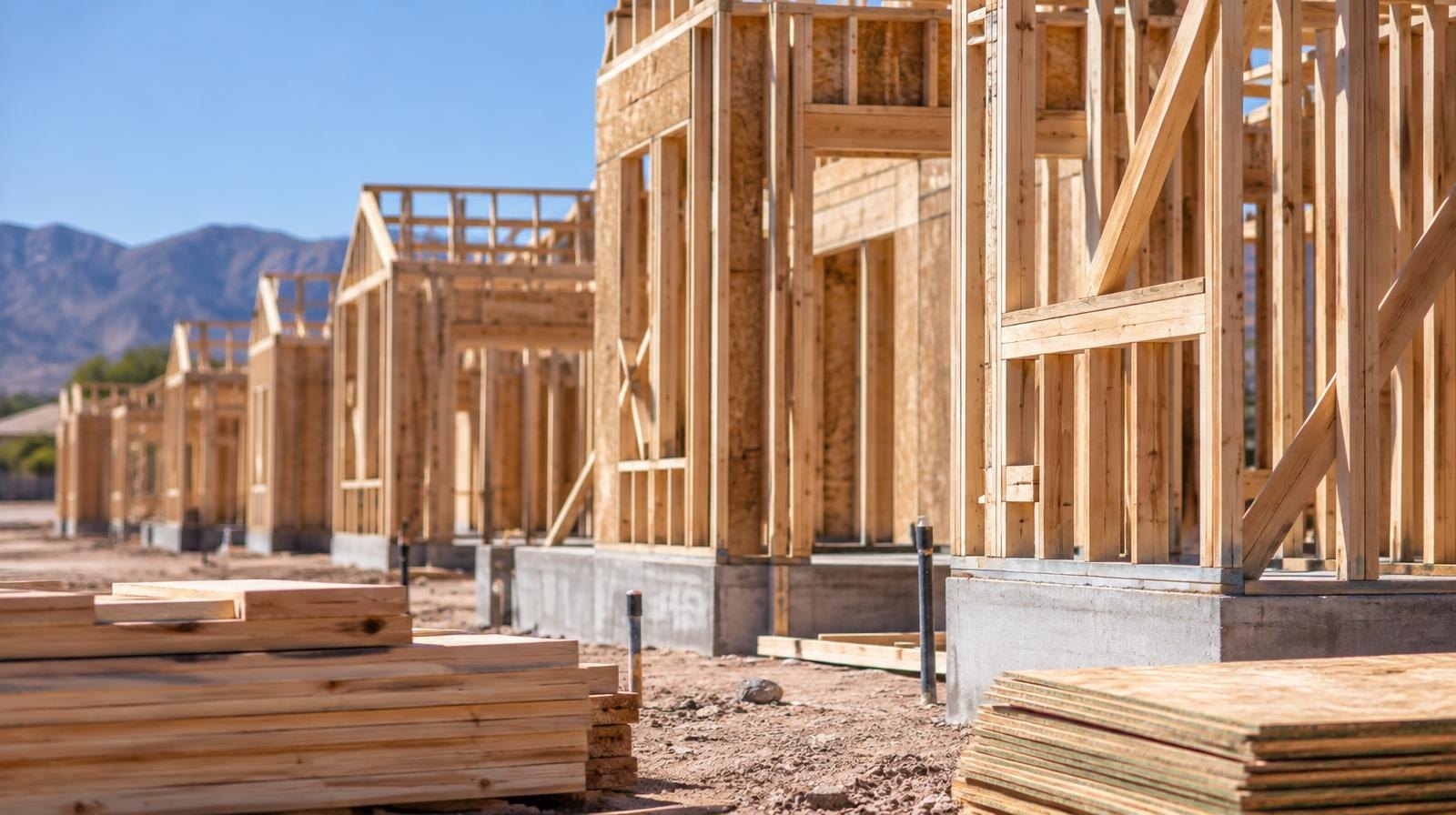
Nevada issued 29% fewer housing permits through August than it did during the same stretch in 2025, ranking 49th out of 50 states and Washington, D.C., for its housing supply pipeline, according to a new UNLV Lied Center for Real Estate report.
The state approved 8,986 new housing units from January through August 2026, down from 12,662 during the same period a year earlier, KLAS first reported. Permits also fell 27% compared with 2023.
Nicolas Irwin, research director at the Lied Center, said the shortfall will push home prices higher and hurt the region's ability to attract employers.
"It's going to be higher prices for all of us," Irwin told KLAS. "It's higher prices to purchase. It's higher rent for those that maybe want to rent a single-family home."
Those rising costs make Southern Nevada less competitive for business recruitment, Irwin said. If the region cannot provide housing for workers, he added, companies will look elsewhere.
UNLV researchers labeled Nevada a "robust straggler," meaning the state finishes near the bottom no matter how the center weights its four ranking criteria. Nevada's population grew nearly 1% over the past year, according to the report, yet permit activity moved in the opposite direction.
Why permits are falling
Irwin pointed to several factors specific to the Las Vegas metro area, including the price of land and the federal government's control of most land surrounding Clark County. He said the Bureau of Land Management's process for releasing parcels to the private market "isn't as quick as you would hope it to be."
State policy compounds the problem, Irwin said. Zoning rules encourage large single-family developments, and Nevada's condo defect laws discourage developers from building condos and townhomes, which Irwin called a key way for newcomers to enter the housing market.
A separate analysis by the Las Vegas Review-Journal found that Southern Nevada's residential building permits fell 35% in the first half of 2026 compared with the same period in 2025. That was the steepest drop among the 55 largest metro areas in the country, according to Lied Center data cited in that report. Nearly 85% of all residential permits in the Las Vegas area through June were for single-family units, compared with about 46% in Salt Lake City and 29% in Seattle.
Affordability gap widens
The UNLV report also measured how far affordability has slipped since 2018. A Nevada household would need a 36% increase in median income to reach the same comfort level buyers had that year, the report found.
A separate Realtor.com report card, also covered by the Review-Journal, gave Nevada a C-minus for affordability and homebuilding. The state's median home list price stood at $491,936 against a median household income of $74,821. Joel Berner, a Realtor.com senior economist, said the average monthly mortgage payment on a median-priced Nevada home consumes about 45% of the median earner's monthly income, well above the 30% threshold considered affordable.
Henderson Mayor Michelle Romero acknowledged the affordability squeeze during her Oct. 14 State of the City address at M Resort Spa Casino, as News 3 reported. She highlighted upcoming projects, including two Four Seasons Private Residences towers in Black Mountain and a youth sports complex on the former Fiesta Henderson site.